I think that there will be one more round of blasting and spraying later in the build. I still intend to paint the wheel rims, the lower grill panel and a host of small parts such as door hinges.
Thursday, 26 September 2013
Painting the panels
Not too much to say other than I sprayed epoxy primer onto all the stripped panels and here are some pictures! I sprayed them in two sessions over two weekends: first the insides of all the panels, then the outsides.
I think that there will be one more round of blasting and spraying later in the build. I still intend to paint the wheel rims, the lower grill panel and a host of small parts such as door hinges.

I think that there will be one more round of blasting and spraying later in the build. I still intend to paint the wheel rims, the lower grill panel and a host of small parts such as door hinges.
Thursday, 5 September 2013
Last of the blasting (well almost)
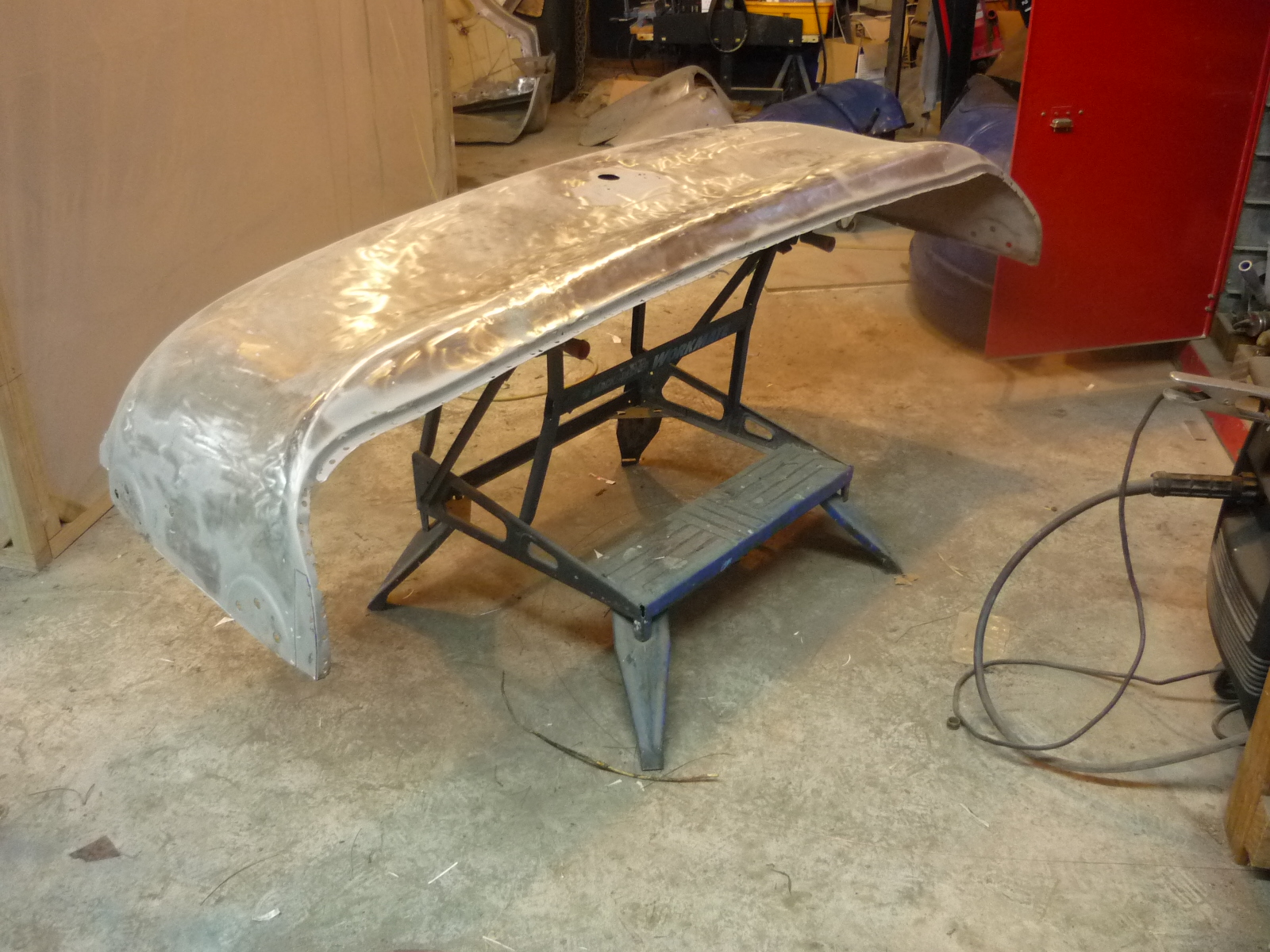
I've now completed the first (and biggest) round of blasting and it was nice to pull all the bits out of the workshop and give it all a clean. My plastic tent makes a lot of difference and contains the grit well but the fine paint dust gets everywhere.
Apart from the odd little repair the remaining panels are in good shape.
| Two engine covers |
| Two mudguards |
| Two outer guards |
| Two lower engine cover panels |
Sunday, 1 September 2013
Cab front panel
The panel that forms the whole front of the cab below the windscreen is the worst part of my new cab. It is dented on one corner, repaired in the middle and rusted along the lower edge. For this reason I plan to replace it with the panel from the old cab which seemed to be better.
Removing it was no mean task with nearly 200 spot welds to drill out!
Cut out for patch and new metal welded in. If you have not discovered flap wheels (on a small grinder) for dressing welds they are simply brilliant: far better and quicker than a grind wheel.
The other rust area is in the middle where the Bedford badge bolts on. There is a moisture trap behind the badge where a reinforcing bar is attached.
Removing it was no mean task with nearly 200 spot welds to drill out!
The panel is quite solid but after stripping I found that quite a bit of repair work lurked under filler. I still think that it is better than the alternative.
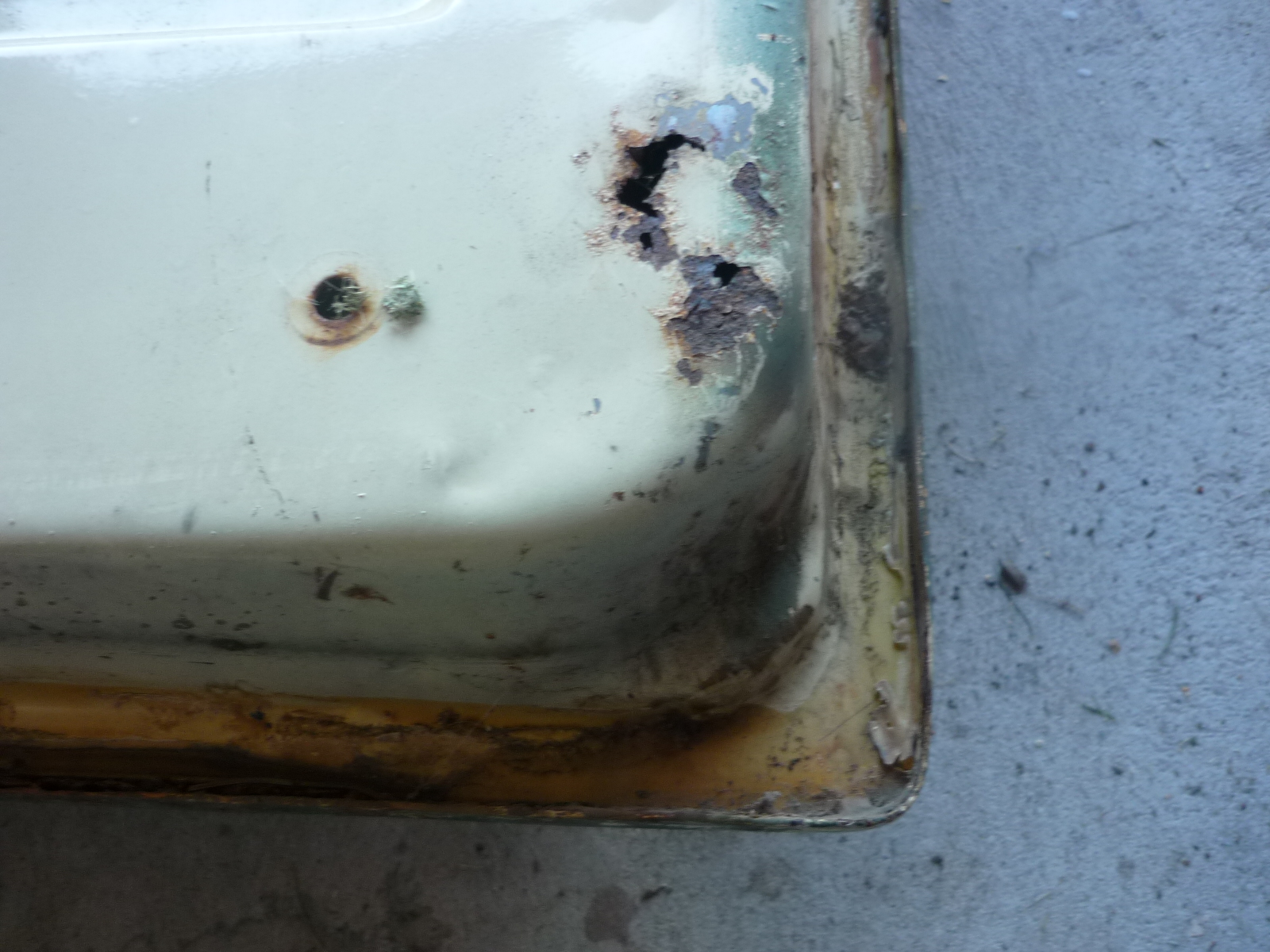
Both the front lower corners have small rusty areas.
| Rust holes with outline for patch panel drawn. |
The other rust area is in the middle where the Bedford badge bolts on. There is a moisture trap behind the badge where a reinforcing bar is attached.
For this I cut a repair section from the other cab, bolted it on using the badge mounting bolts to align it and then drew around it.
Finish weld and dress with a flap wheel. I welded small sections and cooled the panel with the airline between each but there is still a distinct warp in the panel caused by the welding. I spoke to a local business who restore classic cars and their guy seemed to think this not a great deal. He said it was bound to do that and it would be simple enough to fix by shrinking but best to leave that until it is attached to the cab because the panel is quite floppy on its own.
Thursday, 22 August 2013
Front Quarter Panels
The small front quarter panels where the headlights mount were in good condition on the original cab although they took quite a bit of drilling and cutting to get off. I'm pretty sure they are replacement panels.
After stripping and knocking out some minor dents there was one repair job to do.
The lug that bolts the panel to the grill bar was missing and the panel has been welded to the grill bar. It should look like this:
Then welded in place.
Thursday, 8 August 2013
Inner door skin repairs
Both doors had a small area on the lower corner of the inner to repair.
This I patched in the same way as the outer but changed the MIG wire (and tip) from 0.8mm to 0.6mm. This makes a lot of difference because it allows the MIG to run at its lowest power and makes welding thin sheet a lot easier and neater.
One of the doors had further damage that needed repair:
The door stay had been ripped out of the door bending and cracking the inner panel that strengthens the hinge. Without the door stay, the door will get damaged the first time the wind catches it so it needed repair. I cut out a section of the door jam with the grinder and hammered the damaged metal back into place.
Then I welded up the cracks and put a bead right around the hole to thicken and strengthen it.
Then I welded the cut section back.
A couple of other cracks needed welding up.
| The completed door. |
Monday, 29 July 2013
Patching sheet metal.
After blasting I found rust holes on both the inner and outer skins of the first door. Using a 1mm cutting disc I removed the damaged area. I left the edge of the door in place because it seemed sound and because it is formed around a radius which would have been difficult (for me) to repeat.
Here is the hole I cut together with the piece that came out. Repairing the rusty inner parts of the door would have meant much more cutting and I'm not sure of the benefit. After a bit of head-scratching I blasted it clean and gave it a coat of the rust paint.
I used the damaged cut-out as a template for a new piece of 18 swg steel. The welding magnet does a great job of holding the the patch flush with the surface.
Out with the trusty MIG and a grinder fitted with a flap-wheel and a result that I'm very satisfied with. It will take very little filler to finish that ready for paint
Here is the hole I cut together with the piece that came out. Repairing the rusty inner parts of the door would have meant much more cutting and I'm not sure of the benefit. After a bit of head-scratching I blasted it clean and gave it a coat of the rust paint.
I used the damaged cut-out as a template for a new piece of 18 swg steel. The welding magnet does a great job of holding the the patch flush with the surface.
Out with the trusty MIG and a grinder fitted with a flap-wheel and a result that I'm very satisfied with. It will take very little filler to finish that ready for paint
Wednesday, 24 July 2013
Stripping the doors
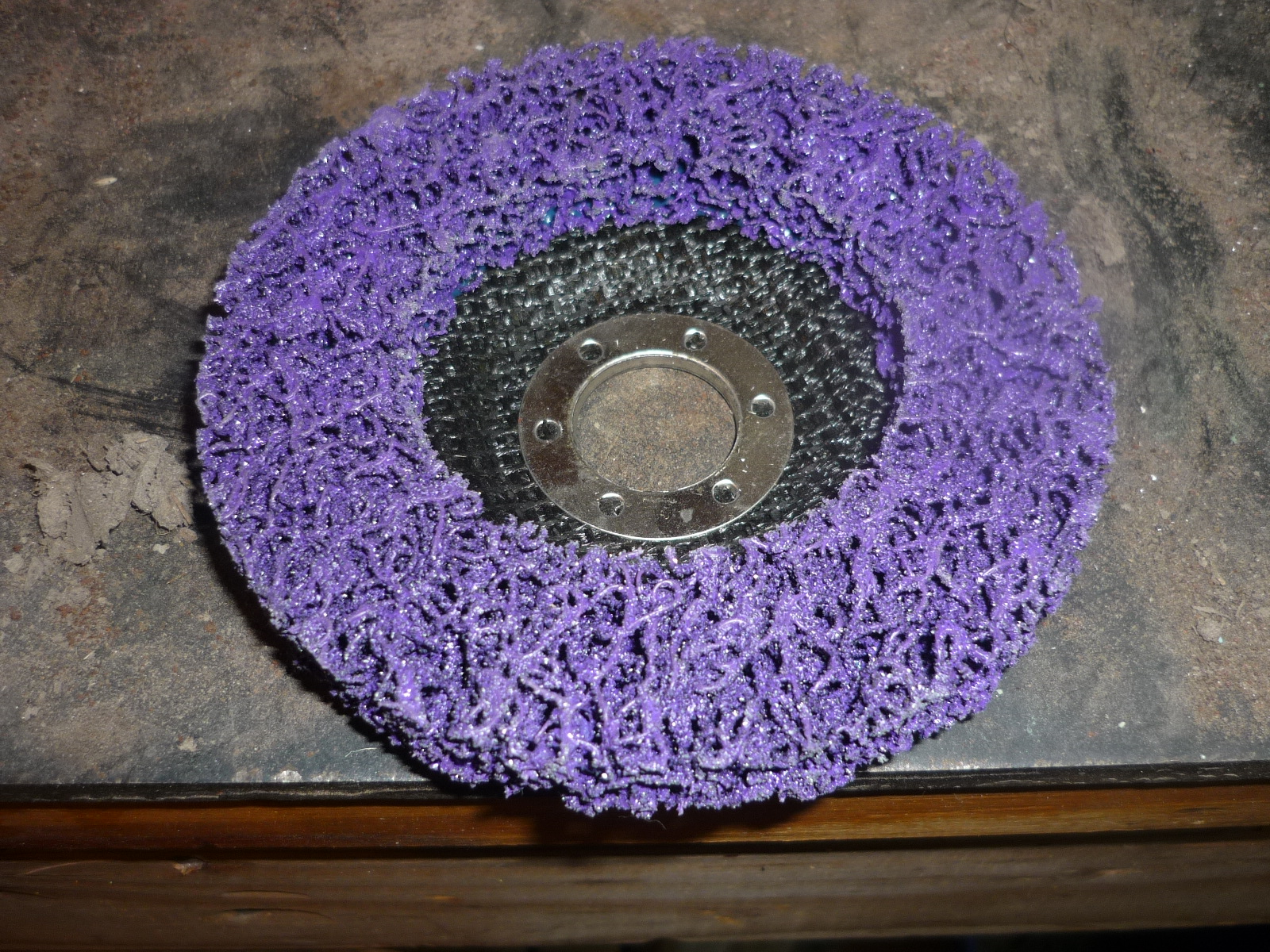
The sandblaster was making very heavy weather of the cab doors so I have changed my approach and used these pads on my grinder quickly to remove large flat areas of paint.
These do a great job as long as you remember to move about so that heat does not build up in the panel. The first door is pretty much rust free.
Some of the internal paint is fine and will never be seen again once the door trim is on so I didn't bother stripping that. I'll just rough is up and paint over it. I will tidy up the tricky bits with the blaster.
Although the inner brace it rusted away below the hinges it is all still very solid so I am not going to worry too much about repairing it. The card on the left is my repair template for the inner door. There are also some other tiny holes in this area which I am not sure how to deal to best so I have run a drill through them for now:
I found this nice clip from a chap in Australia who calls himself Desertrodder
- http://www.youtube.com/watch?v=BVs4AkKQ4iQ
It covers almost exactly the repair I need to make.
These do a great job as long as you remember to move about so that heat does not build up in the panel. The first door is pretty much rust free.
The only repairs needed are on the inside front lower corner.
Once I had cut this out you can see a rust trap created by the inner panel that carries the door hinge captive nuts.
I found this nice clip from a chap in Australia who calls himself Desertrodder
- http://www.youtube.com/watch?v=BVs4AkKQ4iQ
It covers almost exactly the repair I need to make.
Subscribe to:
Posts (Atom)